Takeaways: How We Build Open Source AI
How We Build NYC: The Commercial, Policy, and Public Cases for Open Source AI. 40+ startup founders and ecosystem leaders dug into what open models enable, who owes what, and defining that bargain.
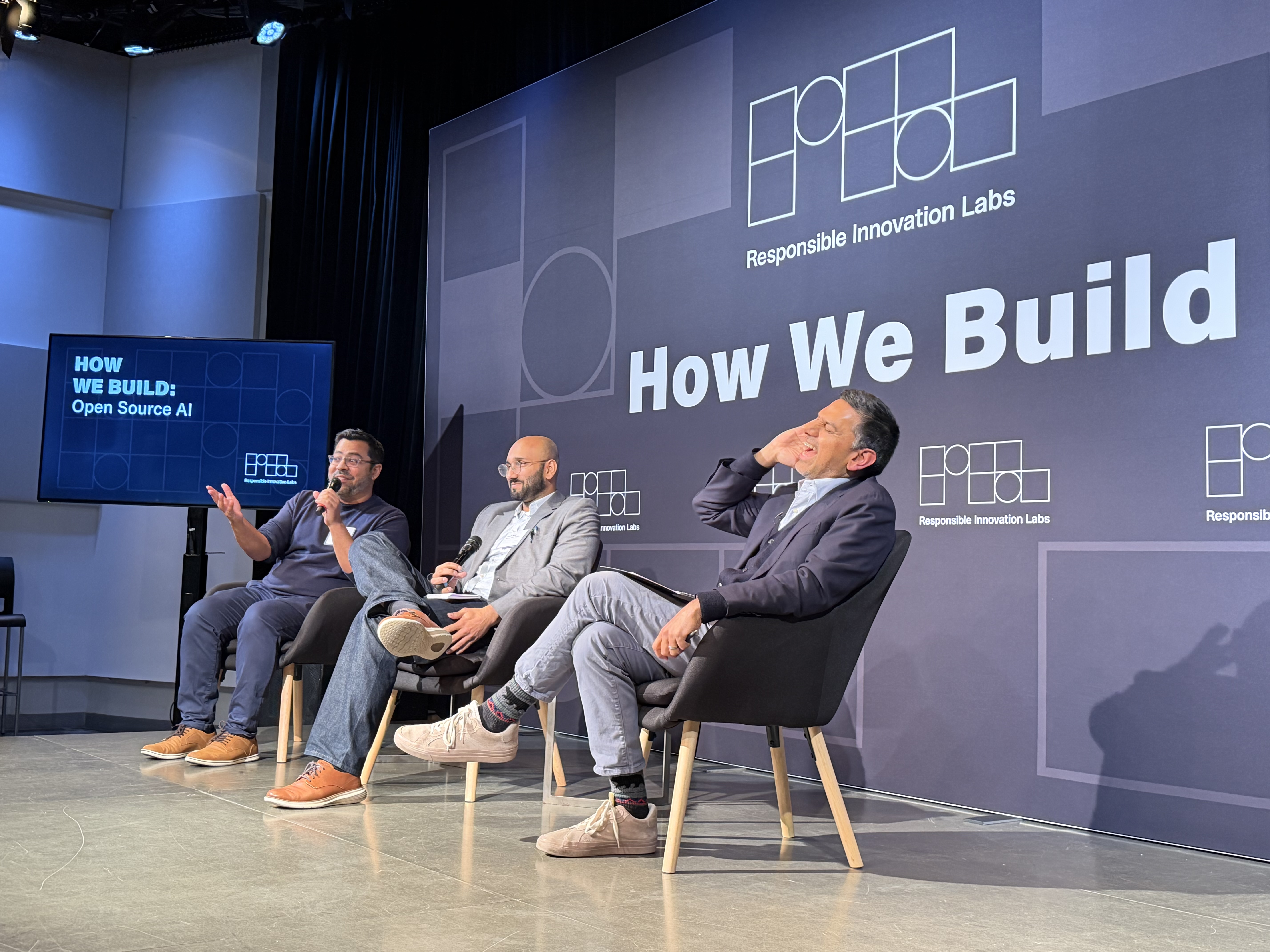
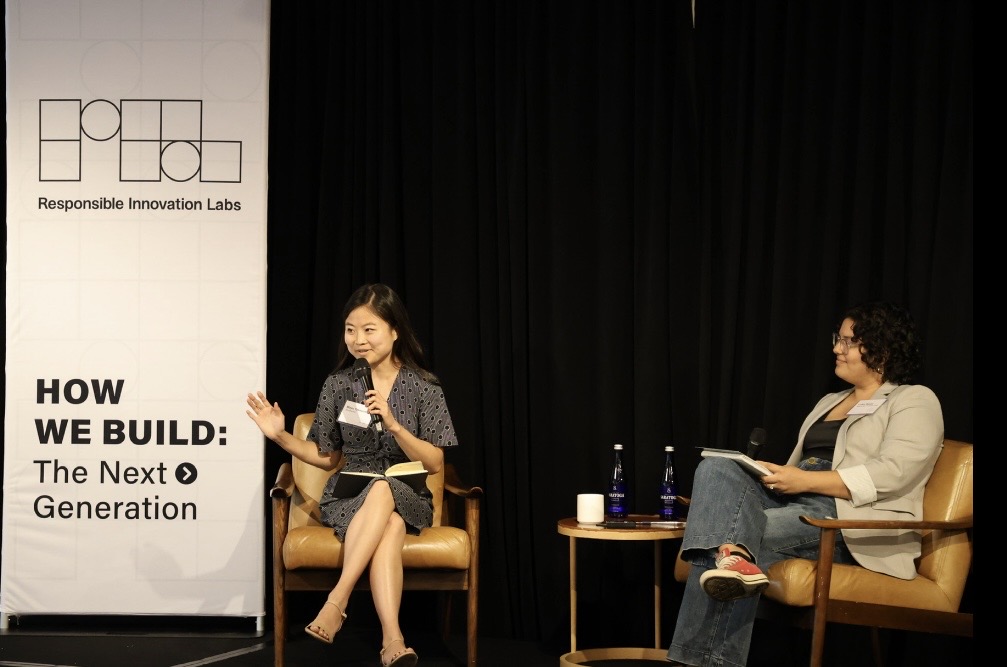
On November 18th, RIL convened How We Build NYC: The Commercial, Policy, and Public Cases for Open Source AI. 40+ leaders joined the working session to workshop how we build open models: what they enable, who owes what, and defining that bargain.
First, this room covered a lot of ground. Founders and inventors build on open weights, the enterprise leaders who buy and deploy them, evaluation and standards experts, lawyers, capital allocators, workforce researchers, technologists, and civil society all in one conversation. Across the afternoon, we dug into what open models enable, who owes what, and defining that bargain.
Onto the takeaways, which will inform how we map our work going forward.
Five Takeaways from How We Build NYC
1. Outside the builder world, open versus closed barely registers.
The public is not having this debate. In the polling we heard, Americans report a better experience with AI than the headlines suggest. They rate it net positive by more than 40 points overall, and higher still at work. On open vs closed, most people have no idea what the distinction means. A majority believe China is ahead of the U.S. or tied with it, and nearly half say they don’t trust Chinese AI companies at all. Trust in American companies is lukewarm, not hostile. Whatever case open models make, they make it against that backdrop.
To non-technical buyers, open still means Chinese. During the afternoon, one founder asked three customers, a chief marketing officer, a chief risk officer, and a private equity partner, to ask whether they cared if open or closed models were used. All said no within five minutes. A few minutes later, all three asked what he meant and if open meant Chinese, and said no to that. None of them wanted to explain a model’s origin to a board. The objection was not capacity or price. It was where the model came from. Until there is a credible American open system, that question will influence institutions.
Policymakers need the everyday case. Builders argue for open in terms of competition, access, and decentralization. To the people writing the rules, that is jargon. Legislators want to know what open models do for a worker, a clinic, a farm, or a small business. Advocates for open have not yet answered that in plain language, and the silence leaves room for the claim that open is inherently unsafe. Across levels, from the public to policymakers to buyers, the game is similar. Non-technical leaders deciding whether to trust open models don’t yet have a reason they can repeat.
2. Open is a bet on control, and builders are making it for practical reasons.
Optionality is the product. Few enterprises run open models in production today, yet nearly all want the option. Leaders in the room named why. Models get retired without notice. Frontier access can be cut off for weeks by export controls. A single provider’s pricing or policy change ripples through every product built on it. A team that can swap models without rebuilding has resilience a single API key can’t offer. One investor said a founder who builds this way signals foresight, not ideology, and that is what earns his attention.
The gap has closed for most real work. One founder says the best open-weight models now trail the frontier by weeks, not months. For many specific tasks, a fine-tuned open model is smaller, cheaper, and good enough to run a company’s own hardware. Open models are approaching half of usage on some marketplaces while earning a small fraction of the revenue. Usage has outrun the business model.
Some of the strongest use cases for it only work with open. A wealth manager cut client onboarding from sixty days to about a week, after mandating that no client data touch a closed API, whatever its terms promised. Everything ran on-prem on an open-weight model. The builders most at ease with open models start from a blunt premise. Assume the model, the operating system, and even the hardware will be compromised, then require proof of integrity at every layer of the stack. Confidential computing is one way that premise becomes practice. Competing banks could compare fraud detection without exposing their data or algorithms. Patient organizations for rare diseases could pool records across states. A buyer could test a vendor without signing a contract first. And when closed models refused to help a team fend off a live cyberattack, an open model let them defend themselves.
3. Responsibility follows whoever holds the joystick.
Test what you deploy. This was the plainest line of the day and perhaps the most important. There is no science yet for how evaluations compose. A model’s off-the-shelf safety and capability scores tell you little once it sits inside a system with your data, prompts, and tools, and the effect can run in either direction. Buyers should ask whether a model can do the real work it touches, whether it should be given the cost, and whether a different model or harness would do it better, and then keep asking. One estimate said about 80% of enterprises surveyed feel that they would fail an audit on whether they have the right evals, knowledge, and so on.
Accountability lands on who fine-tunes and deploys. In the wealth management deal, the contract fight was over who owns the risk when something breaks. Is it the implementer, or the lab upstream? The implementer took it, because they fine-tuned the model, built the infrastructure, and served the use case. Regulators reason the same way. The precedent from open source software is that enforcement goes after the party best positioned to foresee and prevent harm, not the original developer. Open is not a get-out-of-jail-free card. Good intent may earn some credit. It doesn’t earn immunity.
The bar is social license, not compliance. One former enterprise technology leader compared choosing a model to responsibly sourcing ingredients. Ask where the training data came from, what biases it may carry, and whether independent evaluations exist. A technologist showed what earning trust can look like at a local scale. Personal verification of source data, evaluations, and putting their name and email on every page so readers know who to contact when something is wrong. Journalists who were actively kind of hostile towards AI became some of their most loyal readers. The accountability came first. The trust followed.
Governance has to be right on day one. An allocator offered the investor version. Once a company is large, shareholders rarely win back influence they didn’t secure at the start. The moment to set values and structures is the first check, and the asks that work best are stage-appropriate and cost founders and investors little.
4. What one convening cannot settle, and the conversations that come next.
Who builds the American open ecosystem? The room converged on one condition for open to become the enterprise default. It needs a robust, American-sourced open ecosystem. Most of the strongest open-weight models today come from China, and the cost of training at the frontier keeps most U.S. startups fine-tuning those models instead of building their own. Some called for public funding, since the work serves public interest. Others pointed to Linux, which won because a consortium of stakeholders gave it scale. Nobody claimed to know who pays for this, or whether it can keep pace with the closed labs.
Open weights carry a disclosure problem with no agreed answer. Once weights are released, they can’t be recalled or patched. That makes responsible disclosure harder than in traditional security. Publishing that a model scored poorly on a safety benchmark can double as a map to where the harmful capabilities live. Testing shared in the room showed the stakes. Over six months of election disinformation tests, one closed image model got stricter while its open counterpart got more permissive and more realistic. The field has no shared standard for what open developers should disclose, or how.
Faster diffusion means faster disruption. Open models lower costs and ease data concerns, which should speed AI adoption across the economy. That is the point. It also means the effects on workers arrive sooner, whatever one believes about AI’s net effect on jobs. Workers don’t care about open vs closed today. They will care about what deployers owe them. That means transparency when AI shapes hiring, firing, lending, or claims, and a voice in redesigning their work.
5. Many open questions, and the work RIL is taking on next
We are sitting with where the burden belongs. If regulation stays slow, should builders carry it themselves? One founder left with exactly that conclusion. Others pushed back. Experts expect more from courts and states than from Congress, which leaves builders with legal uncertainty resolved case by case. The same tension showed up on China. An investor saw building on a Chinese model as a reasonable engineering choice. A few enterprise buyers saw it as a nonstarter. Both are making rational calls from where they sit.
These takeaways are a map of our work, and RIL is picking up on several threads.
The room showed that builders, buyers, and investors, and policy experts can work through a contested question together and get somewhere. Turning an afternoon of dialogue into narrative and practical guidance is how we work.
Three threads we are exploring:
- A plain-language case for open models. Policymakers want to know what open models do for a worker, a clinic, or a small business. If the people who believe in open cannot answer that plainly, the rules will be written without them. We will carry what we heard into our ongoing conversations with policymakers, test which examples land, and shape a case that is grounded in real deployments and honest about the risks.
- Governance on day one. Once a company is large, investors rarely win back influence they did not secure at the start. Some funds already attach a short mission letter with every investment, and founders sign without friction. Through our founder community and content library, RIL is exploring lightweight governance practices that cost little at the first check and can hold up as the company grows.
- Case studies of open models deployed well. Some of the clearest moments of the afternoon were specific. A wealth manager cut client onboarding from sixty days to about a week by running an open model on its own servers. A security team turned to an open model to defend itself during a live attack after closed models refused to help. A startup built a document viewing tool on open-weights that landed well in regulated industries. We will find more stories like these and tell them, so buyers and policymakers can see what responsible use of open models looks like in practice.
If we got something wrong or missed what mattered most to you, tell us. And if you want to collaborate, on any of these ideas or something else, reach out.
View the article here.
Additional Resources and Tools
Get started on the things you can control: